Sound familiar?
- Sneezing in bursts, especially outdoors
- Itchy, watery, red eyes
- Runny or stuffy nose with clear mucus
- Itchy throat or roof of the mouth
- Symptoms ease after rain or on cool, still days
Where it hides
Your hair and clothes
Pollen rides in on you. It settles on your pillow if you go to bed without rinsing off.
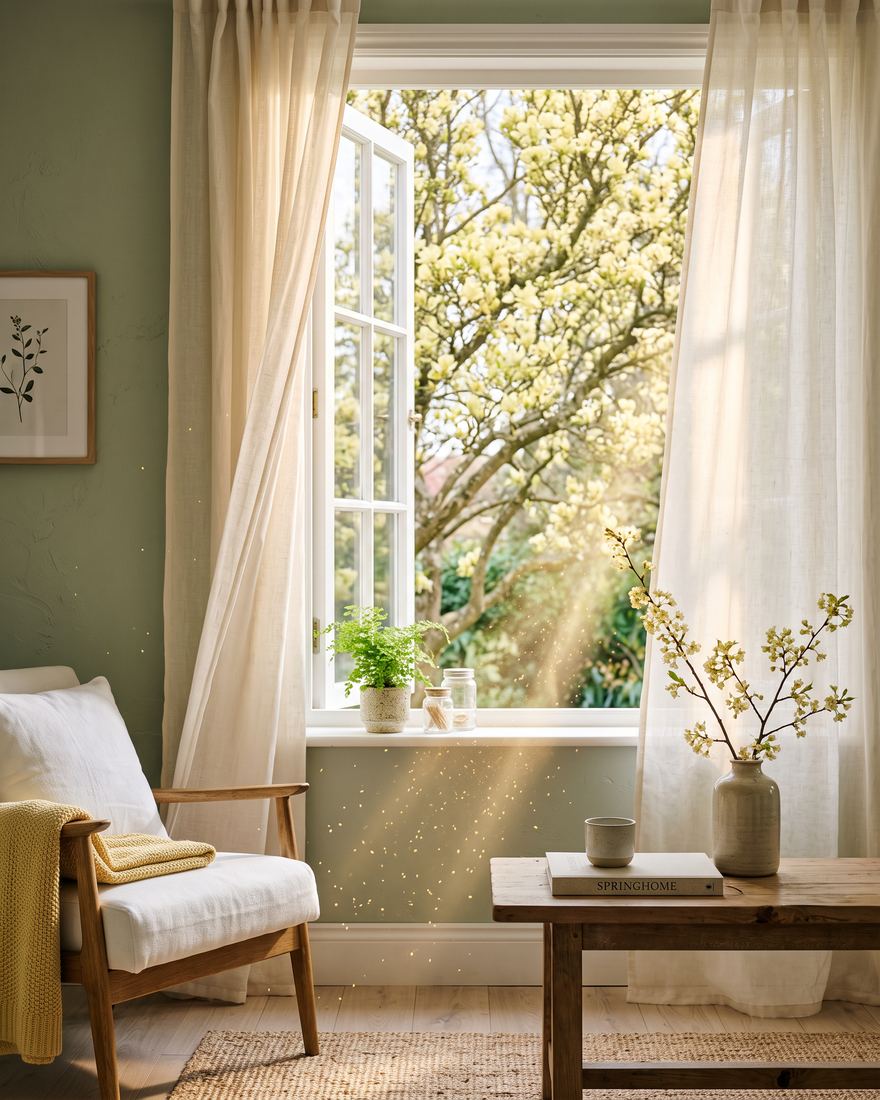
Open windows
A breezy morning can carry pollen straight into bedrooms and living rooms.
Pets
Dogs and cats that go outside carry pollen in their coats.
Car vents
Outside-air mode pulls pollen into the cabin on every drive.
Your home plan
Track the count
Check your local pollen forecast each morning. Plan outdoor chores for late afternoon or after rain, when counts usually dip.
Seal the house
Keep windows closed on high-pollen days and run your HVAC with a MERV 11–13 filter, or a HEPA purifier in the bedroom.
Create a drop zone
Shoes off at the door. Jackets stay in the entry. A quick shower and fresh clothes before bed keeps pollen off your pillow.
Rinse it out
A saline nasal rinse can wash pollen from your nose. Use distilled or previously boiled water only.
Ask about OTC options early
Many people do best starting a nasal spray or antihistamine before their season peaks. A pharmacist can help you choose.
Products that can help
We may earn a commission when you buy through these links, at no extra cost to you. How we choose products
True HEPA bedroom air purifier$$
Pulls fine pollen out of the air where you spend eight hours a night.
Look for: True HEPA (not "HEPA-type"), a CADR that fits your room size
MERV 13 HVAC filters$
Upgrades your whole-house system to catch pollen on every cycle.
Look for: Your exact filter size, MERV 11–13, and check your system can handle it
Saline nasal rinse kit$
Physically flushes pollen and mucus from your nasal passages.
Look for: Premixed saline packets and a bottle you can clean easily
Wraparound sunglasses$
Blocks pollen from blowing into your eyes outdoors.
Look for: Wraparound or close-fitting frames
Pollen mask for yard work$
Cuts how much pollen you breathe while mowing or gardening.
Look for: N95-rated, a snug fit around the nose
Common questions
Is it a cold or pollen allergies?
Colds usually bring aches, sometimes a low fever, and clear up in 7–10 days. Allergies don’t cause fever, often come with itchy eyes, and last as long as you’re exposed — sometimes weeks.
Why are my allergies worse in the morning?
Many plants release pollen in the early morning, and pollen that settled overnight can be stirred up when you start moving around. Keeping windows closed overnight helps.
Does rain help pollen allergies?
Steady rain usually washes pollen out of the air. Thunderstorms can briefly make things worse by breaking pollen into smaller pieces.
Can you develop pollen allergies as an adult?
Yes. Allergies can start at any age, including after a move to a region with different plants.