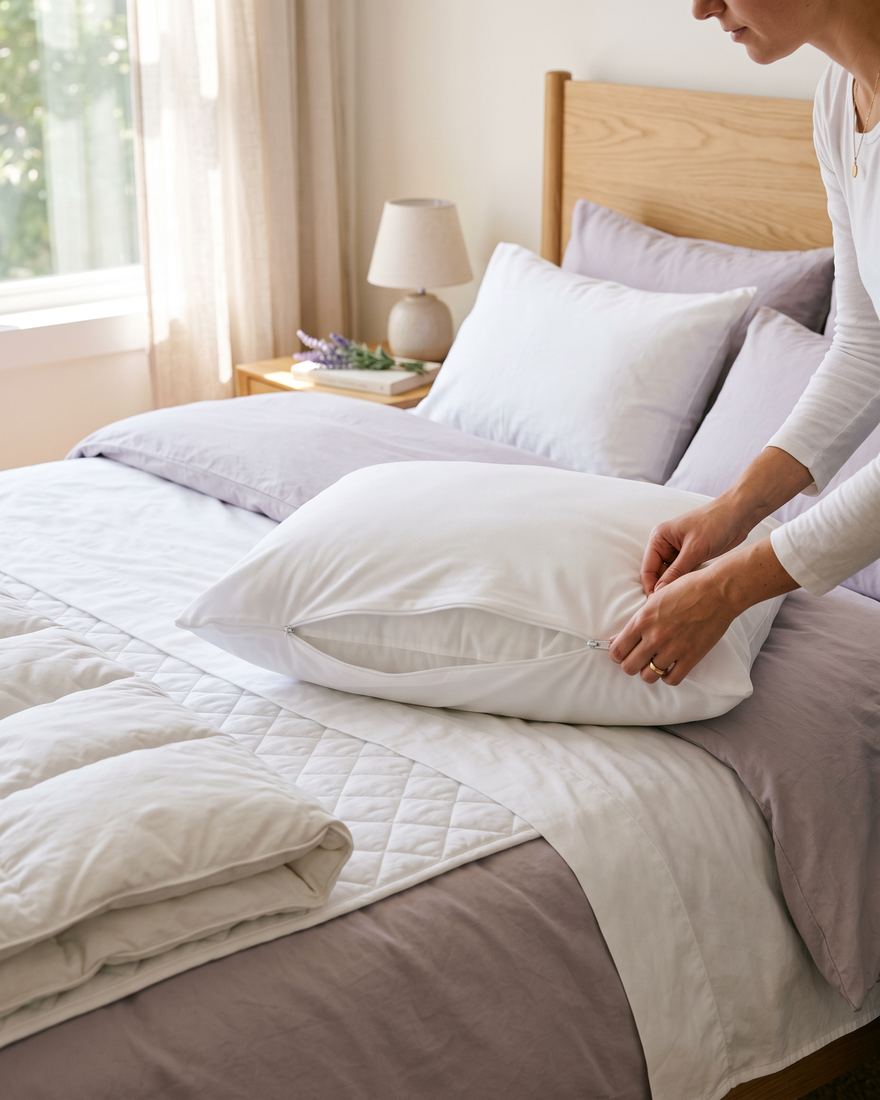
If you wake up stuffy, start with the bed. Allergen-proof encasements are zippered covers that wrap your mattress, box spring and pillows so mite allergens stay sealed inside.
Pair them with a weekly hot wash for sheets and pillowcases, and you’ve covered the most-recommended dust mite steps.
How to choose
Zippers all the way around
Encasements should fully enclose the mattress or pillow. A fitted-sheet style protector isn’t the same thing.
Tight weave, still breathable
Look for a tightly woven fabric labeled allergen-proof. Plastic-style covers work but can sleep hot.
Washable everything
Choose pillows, comforters and blankets you can wash in hot water or dry on high heat.
Skip the extras
Decorative pillows, bed skirts and canopies are dust collectors. Keep the bed simple.
Build your allergy-proof bed
Tick what you already have. Whatever’s left is your shopping list.
- Washable comforter or duvet coverFits your home washerShop
- Washable pillowsWash hot or replace yearlyShop
- Pillow encasementsZippered, under your pillowcaseShop
- Hot-washable sheetsWashed weekly at about 130°FShop
- Mattress encasementThe most important layerShop
- Box spring encasementSeals the base layerShop
What to shop for
We may earn a commission when you buy through these links, at no extra cost to you. How we choose products
Zippered mattress encasement$$
The most recommended step for dust mite allergies.
Look for: Zippered on all sides, allergen-proof fabric, your mattress depth
Zippered pillow encasements$
A barrier between your face and the mites inside your pillow.
Look for: Fully zippered, breathable, washable
Box spring encasement$
Seals off the layer most people forget.
Look for: Zippered, fits your box spring height
Duvet and comforter encasement$$
Wraps a comforter you can’t wash often.
Look for: Zippered, allergen-proof weave
Cooling allergen-barrier sheets$$
Tight weave without sleeping hot.
Look for: Tight-weave cotton or Tencel lyocell, hot-wash safe
Washable pillows$
Wash them hot or replace them yearly.
Look for: Machine washable and dryable
Washable down-alternative comforter$$
Fits a home washer for regular hot washes.
Look for: Machine washable, fits your washer drum
Organic cotton sheet set$$
Gentle on sensitive skin, no added finishes.
Look for: GOTS-certified organic cotton
Washable pet bed$
Wash dander out weekly instead of replacing the bed.
Look for: Removable, machine-washable cover
Common questions
How often should I wash bedding for allergies?
Weekly for sheets and pillowcases, in hot water around 130°F, or dry on high heat. Wash encasements every couple of months.
Do I still need encasements if I wash my sheets?
Yes. Washing gets the sheets, but most mites live inside the mattress and pillow, which is what encasements seal off.