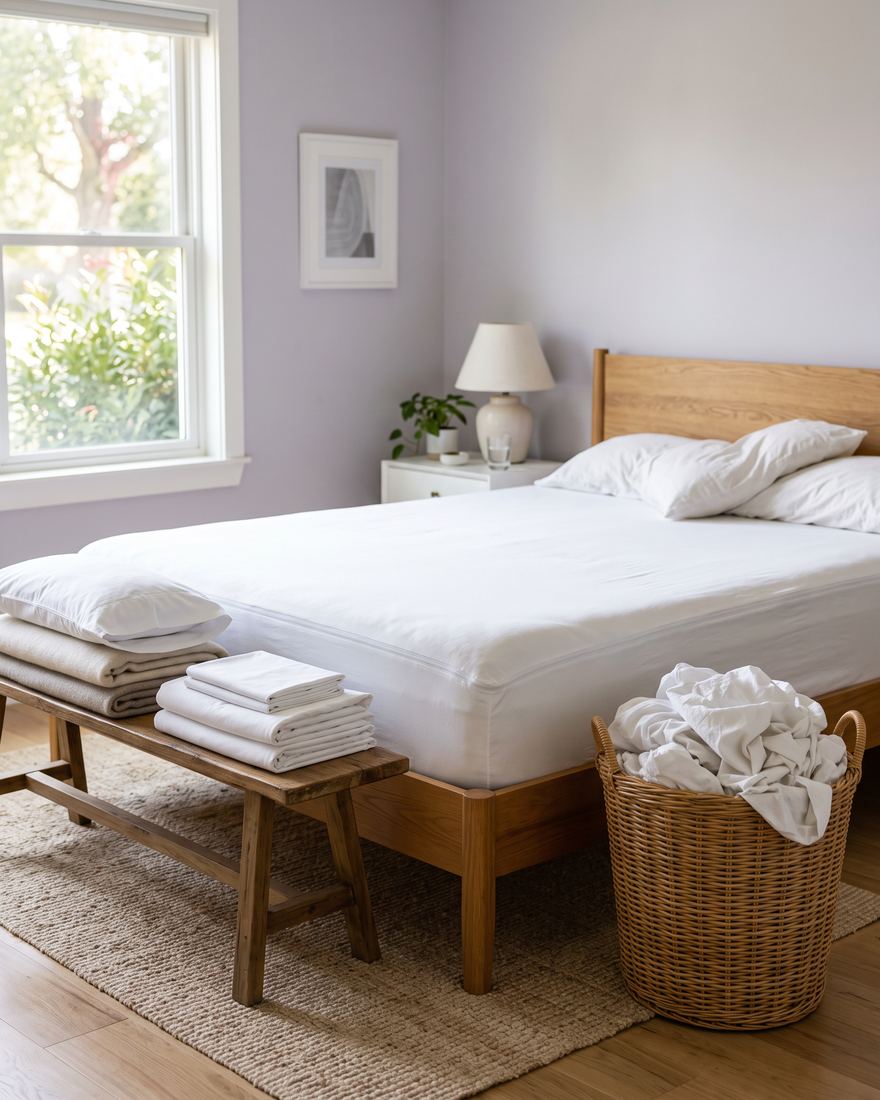
Saturday morning: strip and encase
Pull every layer off the bed. Wash sheets, pillowcases and any washable blankets on hot, around 130°F, or dry them on high heat.
While the laundry runs, zip the mattress, box spring and pillows into allergen-proof encasements. This is the single biggest step for dust mite allergies.
Saturday afternoon: clear the dust catchers
Look for anything soft that rarely gets washed: throw pillows, bed skirts, stuffed animals, piles of clothes, stacks of books. Wash it, store it in a closed bin, or move it to another room.
- Decorative pillows
- Heavy drapes
- Open bookshelves
- Fabric headboards
- Clothes on chairs
Sunday morning: clean top to bottom
Work from high to low so dust falls onto areas you haven’t cleaned yet. Damp-dust with microfiber, then vacuum slowly with a sealed HEPA vacuum, including under the bed.
If you’re the allergic one, wear a mask, or ask someone else to vacuum and stay out of the room for an hour afterward.
Sunday afternoon: control the air
Set up a True HEPA purifier sized for the room, a foot or two from the wall. Put a hygrometer on the nightstand. If humidity sits above 50%, add a dehumidifier.
Close the door to pets from here on. It’s your allergen-light zone.
Keep it going
Weekly hot wash for sheets, weekly vacuum, filters changed on schedule, and a quick shower before bed during pollen season. That’s the whole routine.
What you'll need
We may earn a commission when you buy through these links, at no extra cost to you. How we choose products
Mattress encasement$$
The foundation of the allergy bedroom.
Look for: Zippered, allergen-proof
True HEPA bedroom purifier$$
Cleans the air while you sleep.
Look for: Quiet sleep mode, CARB certified
Hygrometer$
Shows humidity at a glance.
Look for: Digital
Common questions
What should I do first if I can only do one thing?
Encase your mattress and pillows, then wash your bedding hot every week.